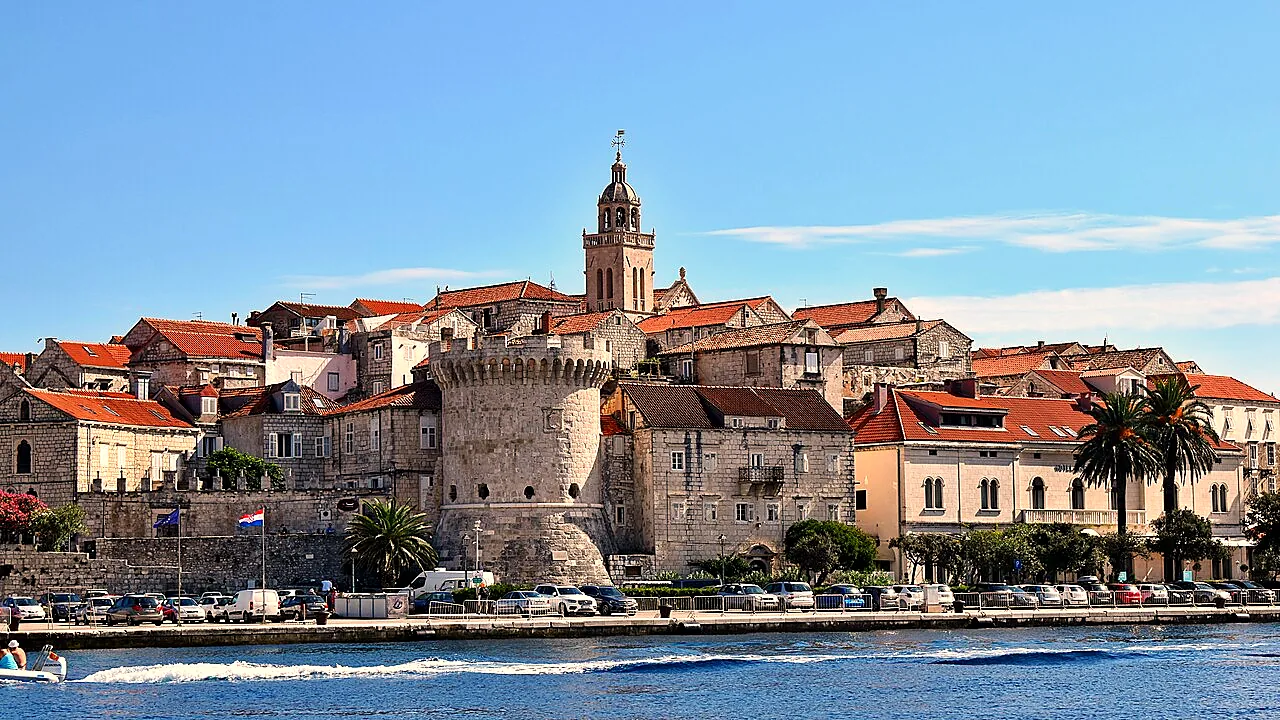
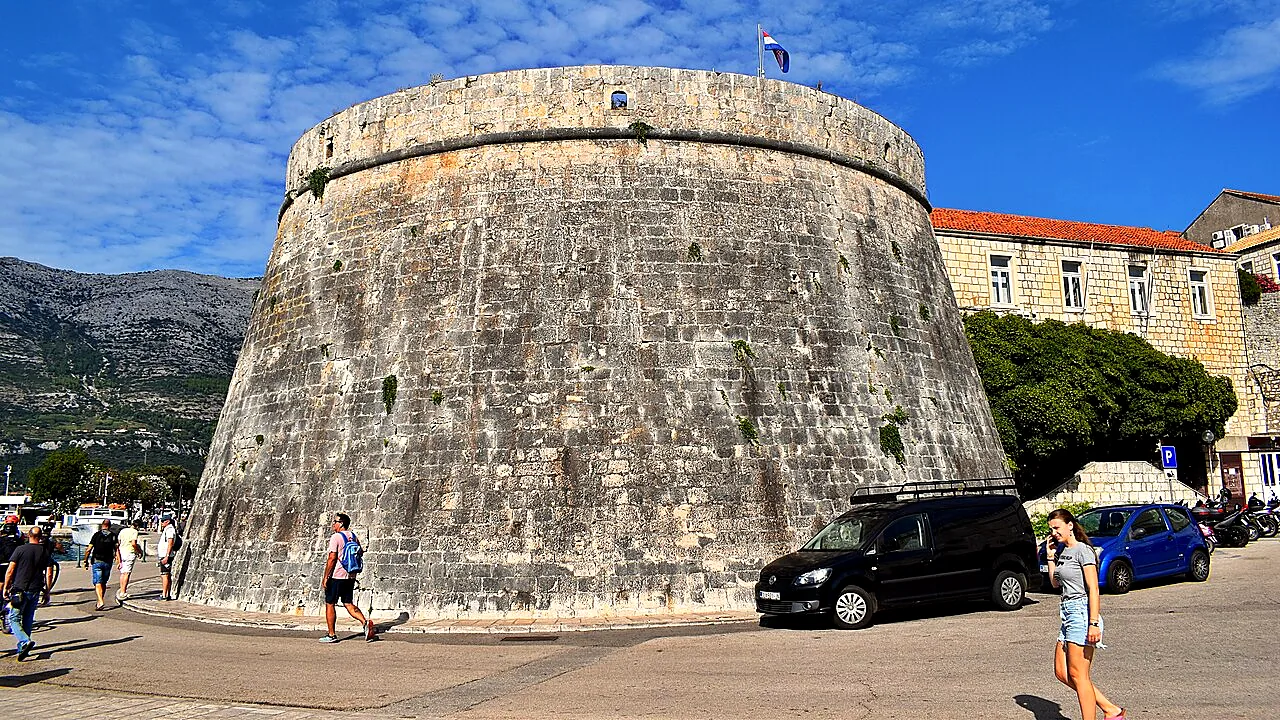
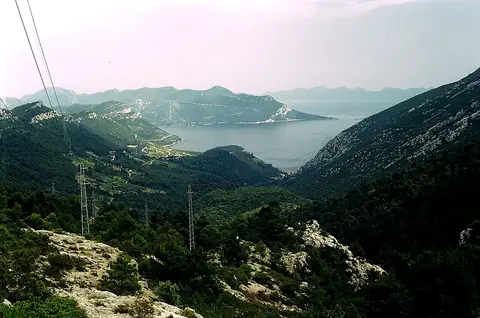
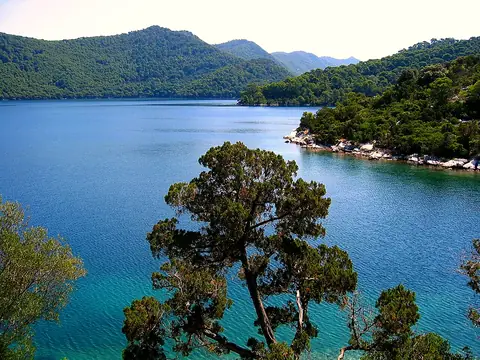
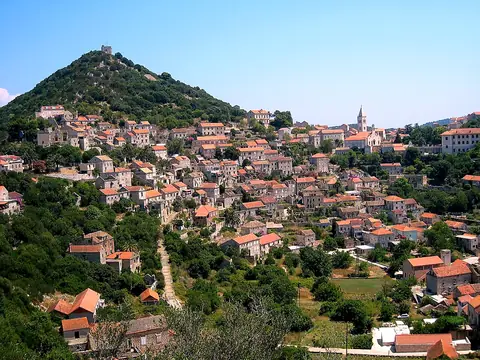
Korčula Town sits on a small peninsula ringed by walls and towers, and its lanes are laid out like a fishbone – so the wind flows through and the sun doesn't beat in too hard. Korčula claims to be Marco Polo's birthplace and keeps alive the Moreška, a centuries-old sword dance. The island itself is green, with pine forests, vineyards and many coves.
At a glance
Region
South Dalmatia
Ferry
Orebić – Dominče (approx. 15 min), Split – Vela Luka
Catamaran
Split, Hvar, Dubrovnik – Korčula (in season)
Wine
Grk (Lumbarda), Pošip (Čara, Smokvica)
Best time to visit
June, September
Ideal for
culture lovers, food lovers, couples
Highlights
Korčula old town St Mark's Cathedral, the Land Gate, walls and towers
Moreška sword dance, performed regularly in summer
Lumbarda wine village with Grk vines and the sandy beaches Pržina and Bilin žal
Vela Luka harbour town in the west with the prehistoric Vela spila cave
Pupnatska luka pebble cove with turquoise water on the south coast
Getting there
The quickest link is the ferry from Orebić on Pelješac to Dominče near Korčula Town, about 15 minutes. Car ferries run from Split to Vela Luka; in season catamarans connect Korčula Town with Split, Hvar, Mljet and Dubrovnik.
Honest verdict
The old town is small and busy with day-trippers during the day, but magical in the evening. Beaches right by town are modest; the best coves need a car, scooter or boat. The island is long – from the west it takes almost an hour to reach the old town.