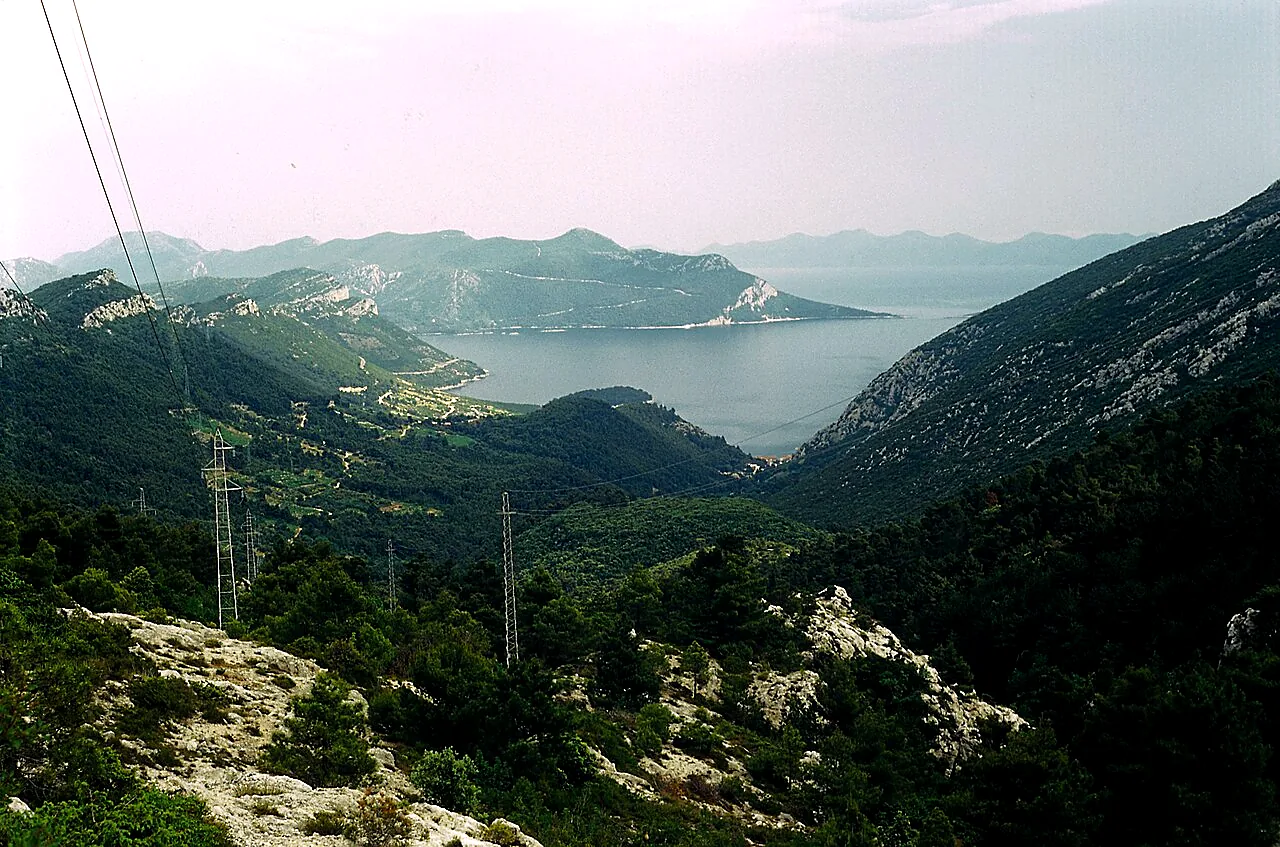
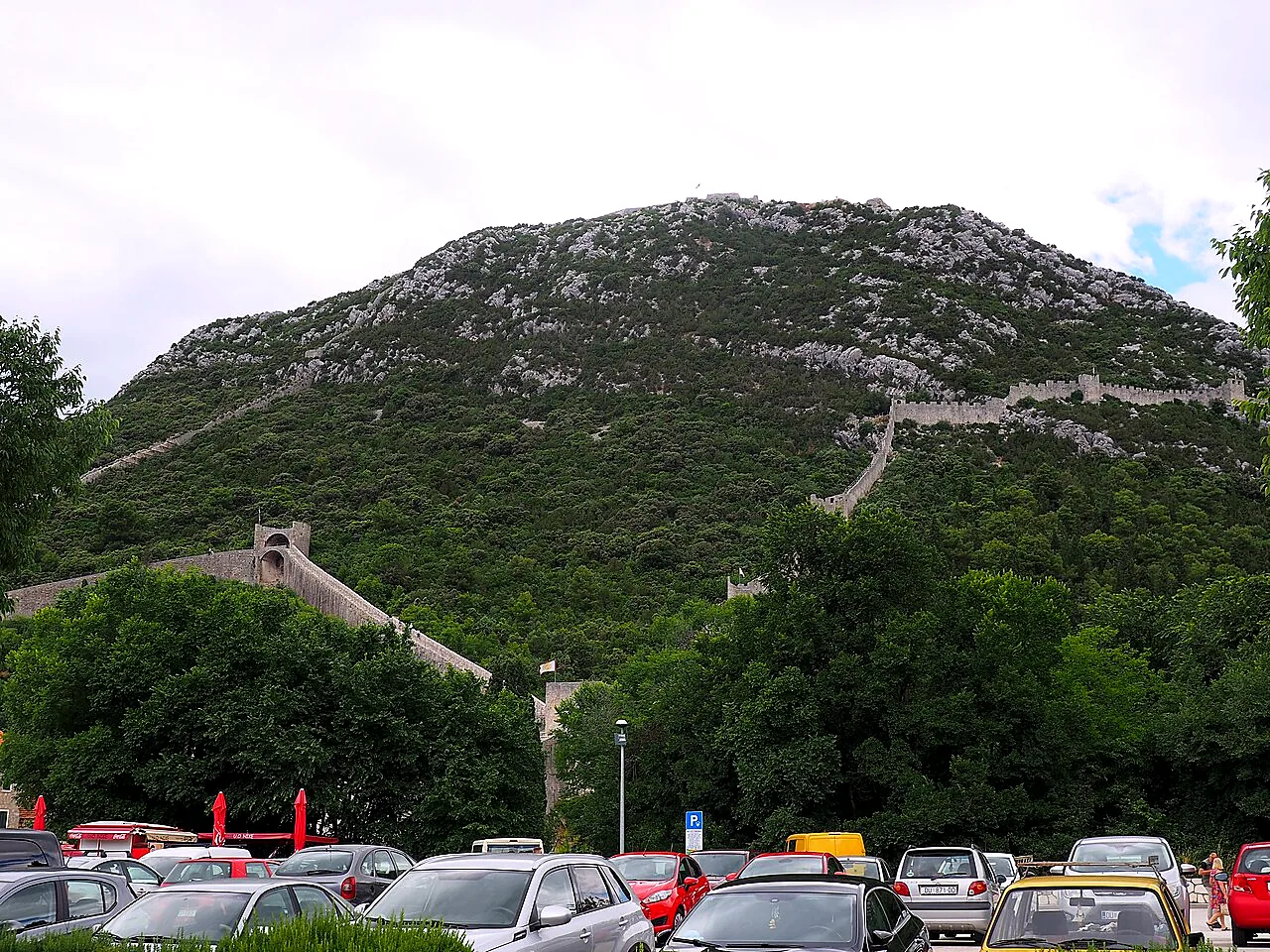
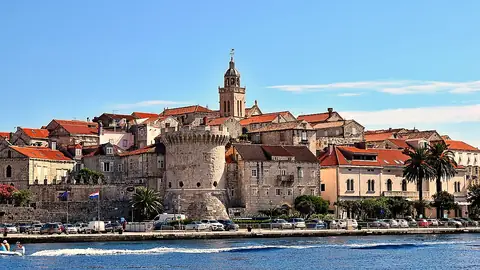
The roughly 65-kilometre Pelješac peninsula is Croatia's best-known red-wine region and, since 2022, directly linked to the rest of the country by the Pelješac Bridge. At its base lies Ston, with a medieval wall system considered Europe's longest, plus the salt pans and oyster beds of Mali Ston. At the far end await Orebić, Viganj and the ferry to Korčula.
At a glance
Region
South Dalmatia
To Dubrovnik
Ston approx. 55 km
Ferry
Orebić – Korčula, Trpanj – Ploče
Wine
Plavac mali from Dingač and Postup
Best time to visit
May, June, September, October
Ideal for
food and wine lovers, windsurfers, families
Highlights
Walls of Ston medieval fortifications between Ston and Mali Ston, walkable with views of the salt pans
Ston salt pans in use for centuries, salt harvest in summer
Mali Ston oysters served in waterside restaurants straight from the bay
Dingač and Postup steep vineyards above the sea, wine cellars in Potomje and Trstenik
Orebić resort with pebble beaches, a Franciscan monastery and the climb up Sv. Ilija
Viganj and Kučište windsurf and kitesurf area on the Pelješac channel
Beaches
The sandy beaches of Prapratno and Žuljana bay in the south are especially family-friendly. Near Orebić, pebble beaches under pines face Korčula. Trpanj in the north is quiet and has a ferry to Ploče.
Honest verdict
Pelješac is quieter and more authentic than Hvar or Korčula, but spread out – without a car it's hard to get around. The road along the peninsula is winding. In Viganj a strong maestral blows in the afternoon – great for surfers, less so for peace-seekers.