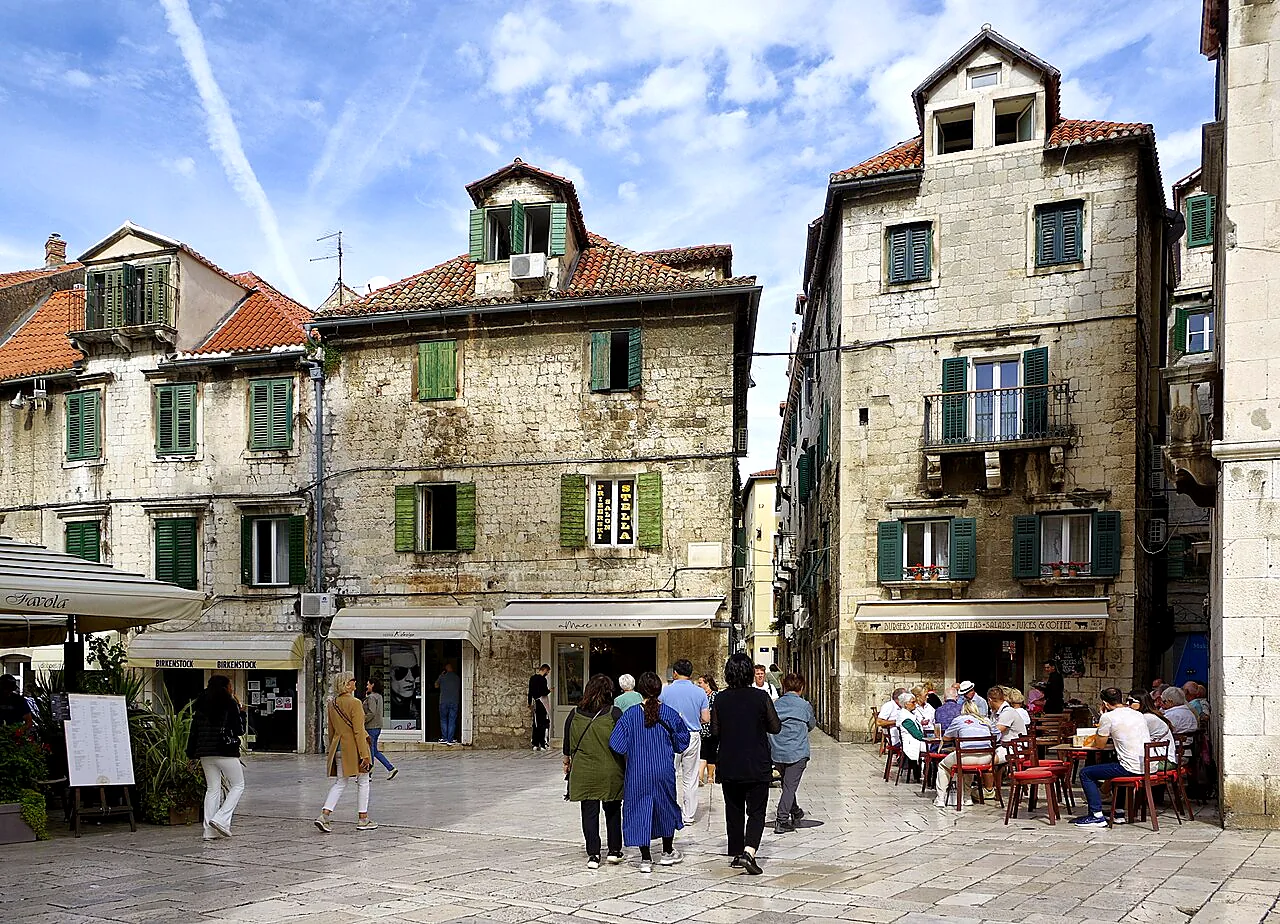
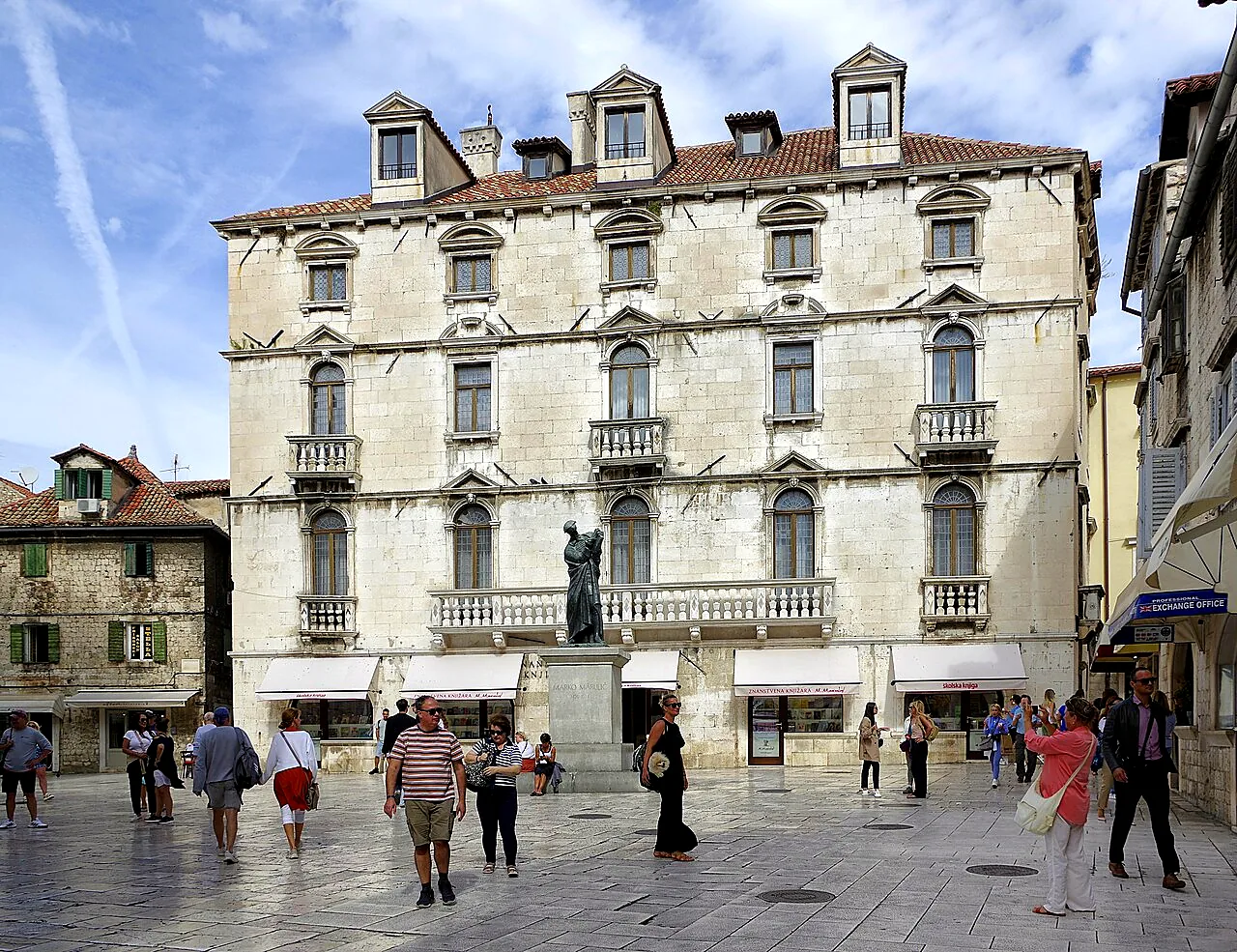
Split is Croatia's second-largest city and the gateway to the Central Dalmatian islands. Its heart is the palace that Roman emperor Diocletian built as his retirement home around AD 300 – today people live, eat and party within its walls. Add a palm-lined Riva, the green Marjan hill and city beaches where locals play picigin.
At a glance
Region
Central Dalmatia
From Zagreb
approx. 410 km, about 4 h via the A1
Airport
Split (in Kaštela), approx. 25 km
UNESCO
Diocletian's Palace since 1979
Best time to visit
May, June, September, October
Ideal for
city breakers, island-hoppers, night owls
Sights
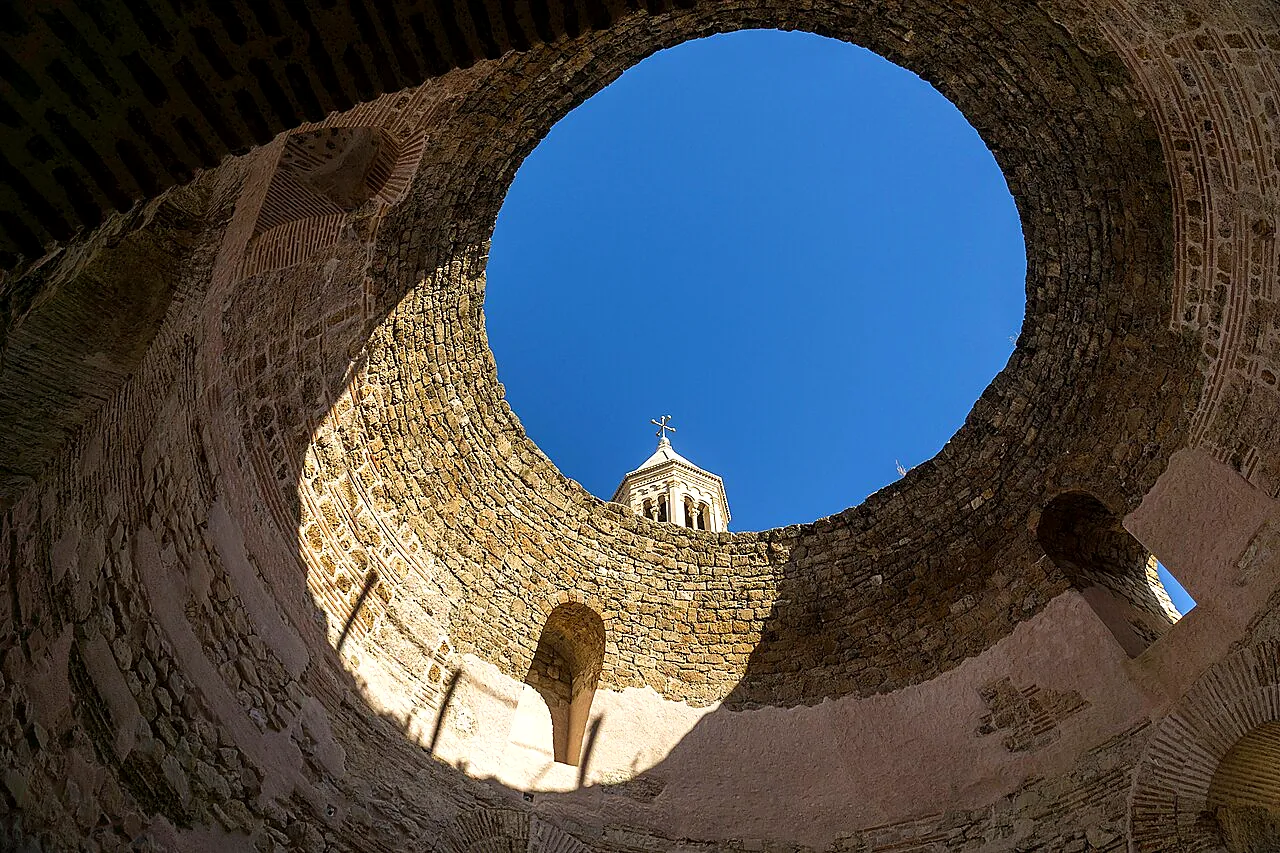
Diocletian's Palace Peristyle, Vestibule, the cellars (Podrumi) and the Cathedral of St Domnius in the former imperial mausoleum
Bell tower climb for views over the old town and harbour
Riva waterfront promenade in front of the palace's southern façade
Marjan wooded hill with the Telegrin viewpoint, walking paths and swimming coves
Meštrović Gallery works by Croatia's best-known sculptor in his former villa
Beaches
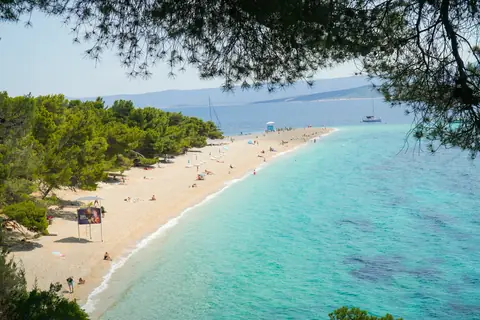
Bačvice is the city beach with sand and shallow water, a few minutes' walk from the centre – this is where picigin is played, and it's very crowded in summer. Quieter are the pebble and rocky coves on Marjan (Kašjuni, Bene) and the beaches towards Stobreč and Podstrana.
Islands from Split
From the ferry port next to the old town, ferries and catamarans run to Brač (Supetar approx. 50 min), Hvar, Vis, Šolta and Korčula. Staying in Split lets you see several islands as day trips.
Honest verdict
In July and August cruise passengers and day-trippers crowd the old town, and accommodation inside the palace is expensive and often noisy. For a quiet stay choose neighbourhoods like Meje, Firule or Žnjan, or towns on the riviera, and travel in. Split is at its most pleasant in May, June and autumn.