Hum is known as the "smallest town in the world": a walled miniature town with a gate, church, bell tower and two lanes – home to only about two dozen people. It lies in the green north of Istria near Buzet, far from the coastal crowds, and is linked to the Glagolitic Alley, a road lined with stone sculptures celebrating the old Croatian script.
At a glance
Region
northern Istria (Buzet)
To the coast
Opatija approx. 45 km, Poreč approx. 60 km
Population
around 20–30
Best time to visit
April to October
Ideal for
culture lovers, hikers, photographers
Speciality
biska (mistletoe brandy), Buzet truffles
The miniature town
Hum grew up in the Middle Ages as a fortified settlement; its town rights and the tradition of a mayor elected every year make it a "town". The heavy copper gate with handles shaped like goat horns, the parish church of the Assumption and the defensive bell tower can be walked round in ten minutes. The small cemetery church of St Jerome preserves Romanesque frescoes with Glagolitic inscriptions.
The Glagolitic Alley
Along roughly 7 km of road between Roč and Hum stand eleven stone monuments commemorating the Glagolitic script – the oldest Croatian alphabet, used in this region for centuries. The alley is best experienced on foot or by bike; Roč itself is also a charming walled town.
Biska, truffles and Buzet
Hum produces biska, a herbal brandy made with white mistletoe – you can try it in the village konoba. Nearby Buzet calls itself the "town of truffles"; in September it hosts the Subotina festival, where a giant truffle omelette is cooked. The area is greener and cooler than the coast, with waterfalls and trails along the Mirna river and in the Ćićarija hills.
Honest verdict
Hum is a one-to-two-hour visit, but well worth it combined with Roč, the Glagolitic Alley and a meal in Buzet or Motovun. If you're looking for peace and rural Istria you can spend a few days in a stone house here – though the sea is about an hour away.



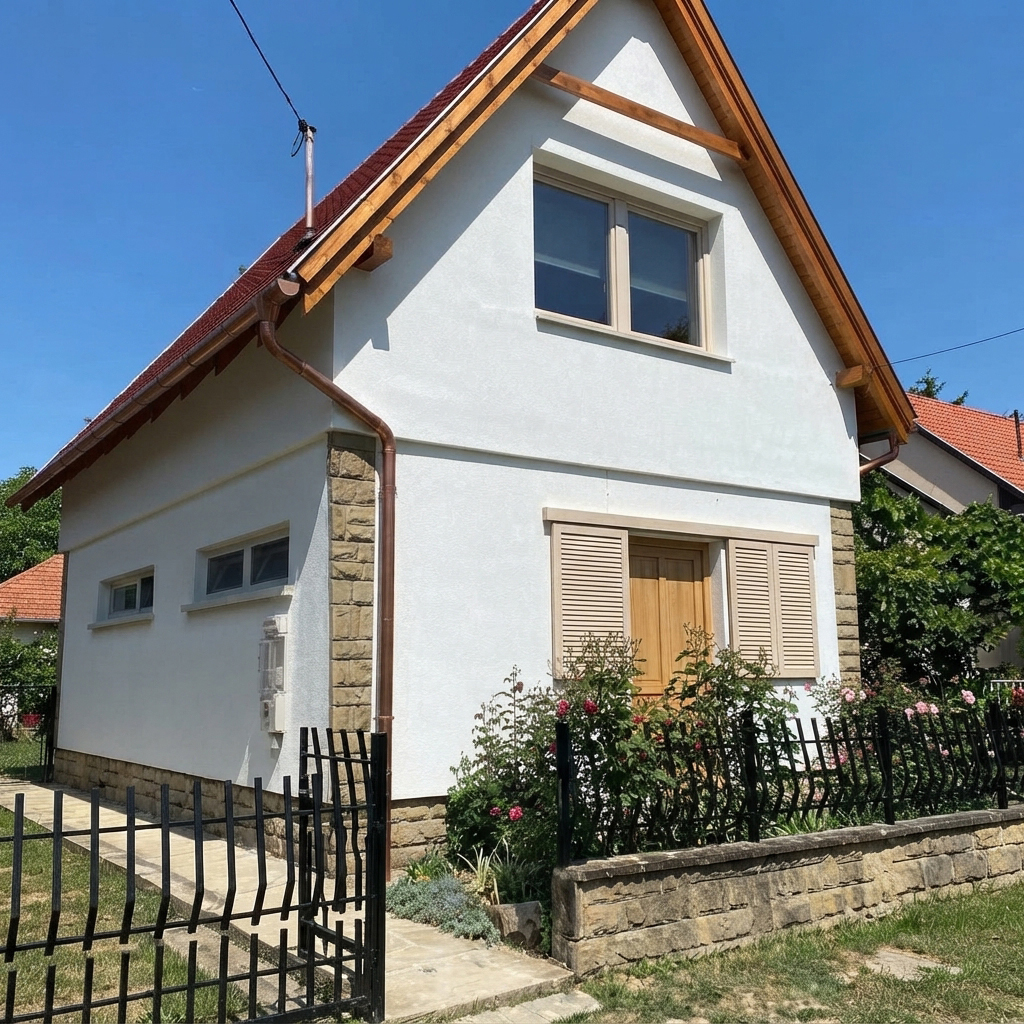 Ferienwohnung VlatkaHoliday home · Labin · up to 4 guestsfrom €99 / night


