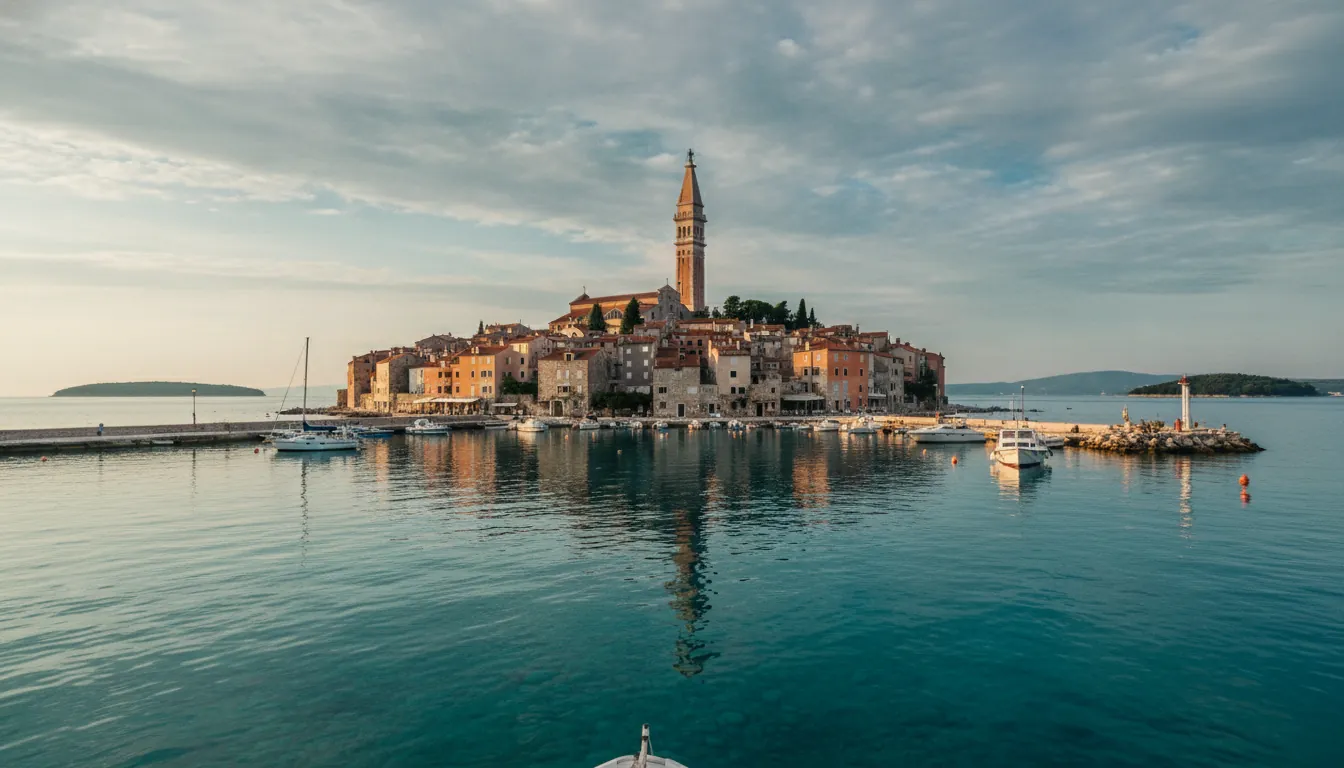
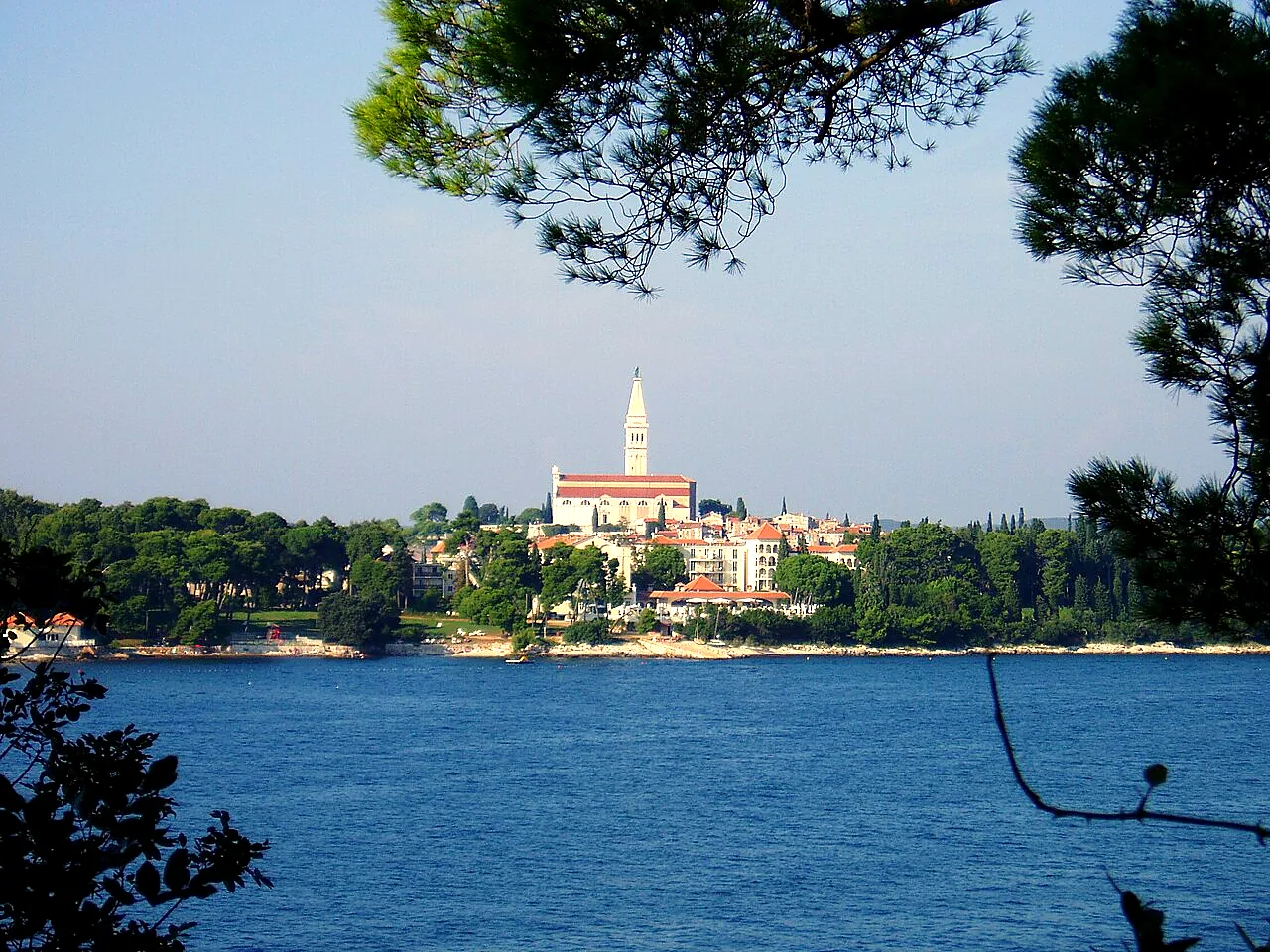
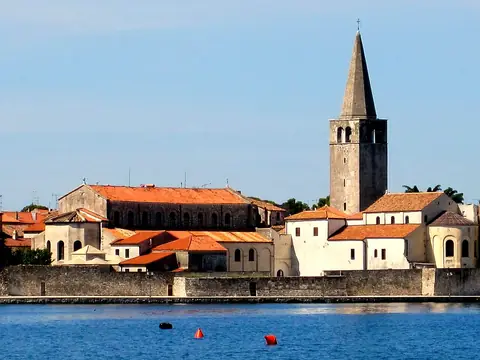
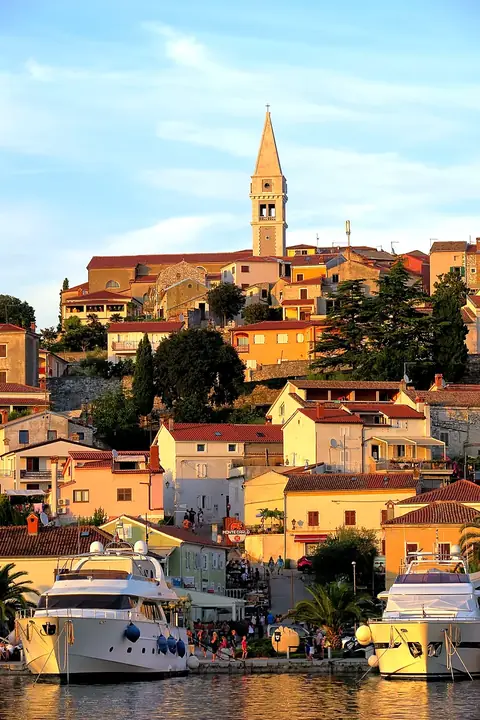
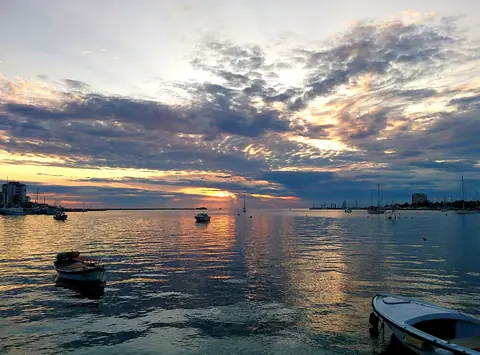
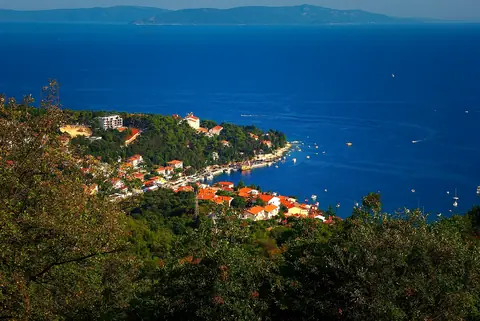
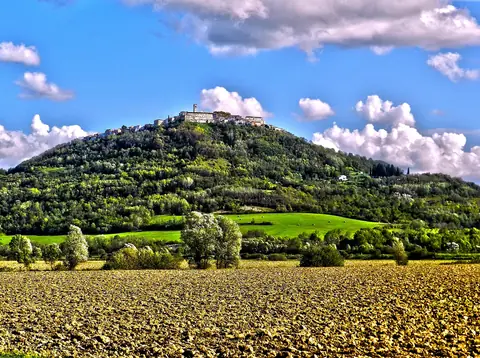
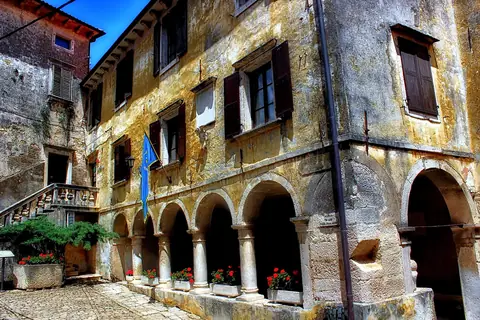
Rovinj (Rovigno in Italian) is Istria's most photographed town: a former island packed with Venetian houses and crowned by the bell tower of St Euphemia's Church. Add a forest park right on the sea, an archipelago of around twenty islands and islets and one of the best restaurant scenes on the coast. The price: in July and August it is crowded and expensive.
At a glance
Region
Istria, west coast
Nearest airport
Pula (approx. 40 km, 40 min)
From Munich
approx. 580 km via Ljubljana
Best time to visit
May, June, September
Ideal for
couples, foodies, photographers, cyclists
Bilingual
Croatian and Italian (both official)
The old town: an island that is no longer one
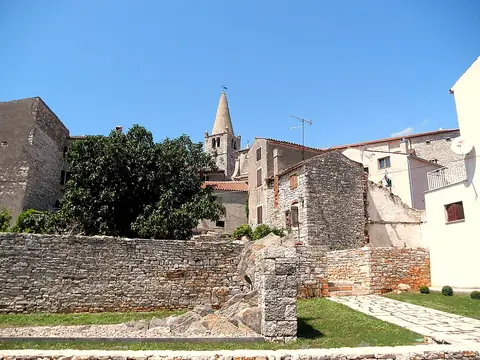
Until 1763 Rovinj really was an island; then the channel to the mainland was filled in. That is why the old town is so tight: houses rising straight out of the sea, alleys barely shoulder-wide, steps instead of streets. The main entrance is the Balbi Arch on the main square, Trg maršala Tita, with its clock tower.
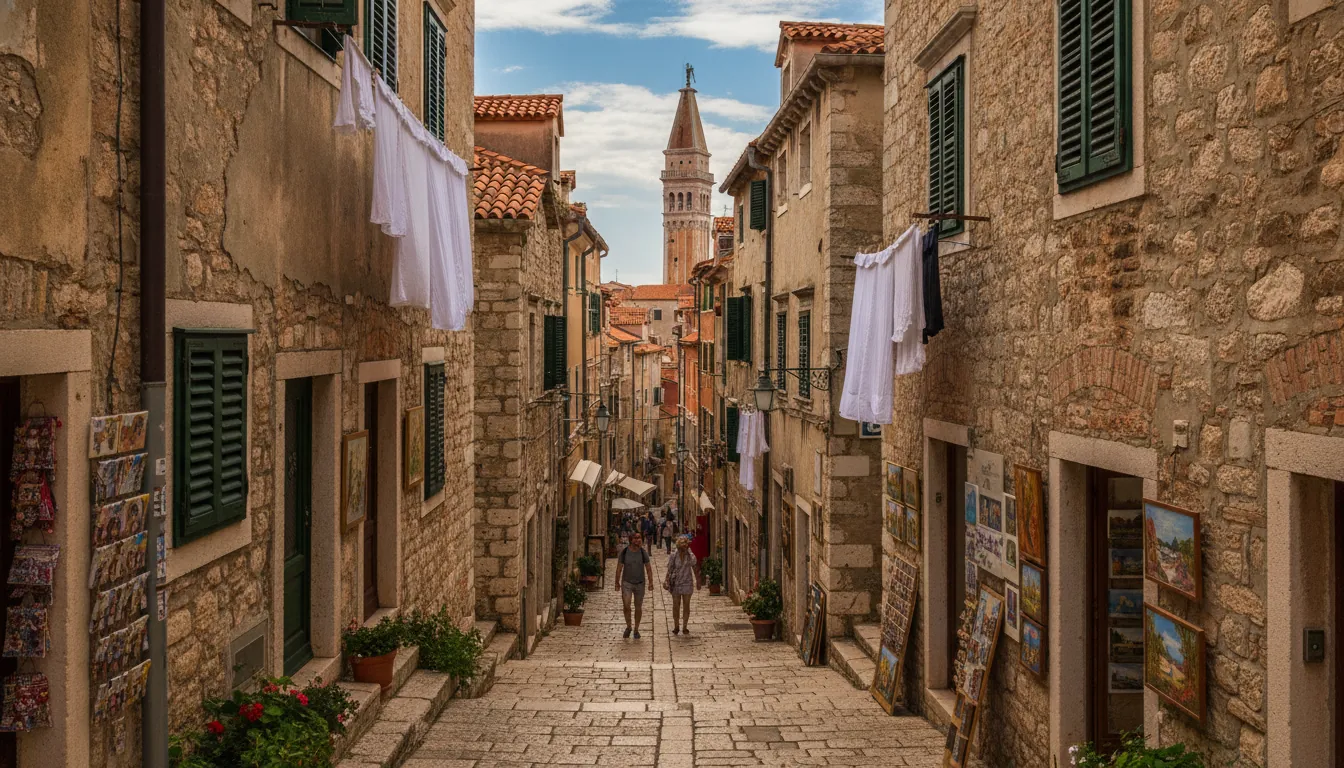
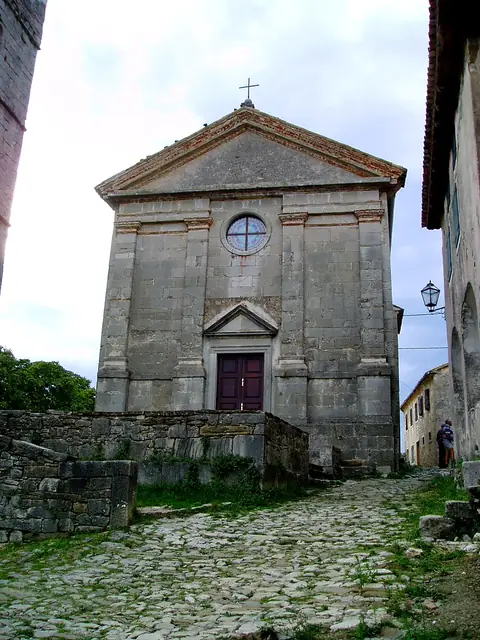
From the arch, Grisia street climbs steeply to the church – an open-air gallery of painters and studios in summer. At the top stands the baroque Church of St Euphemia (18th century) with its bell tower of roughly 60 metres, modelled on St Mark's in Venice. In season you can climb it via steep wooden stairs; the view over roofs and islands is the classic Rovinj shot.
Balbi Arch and clock tower gateway to the old town on the main square
Grisia artists' street; a traditional open-air exhibition takes place here in mid-August
St Euphemia's Church sarcophagus of the town's patron saint, tower climb in season
Batana House (Kuća o batani) small, excellent museum about the traditional wooden fishing boat – a UNESCO-listed boatbuilding tradition
Swimming: rocks, pebbles and a forest park
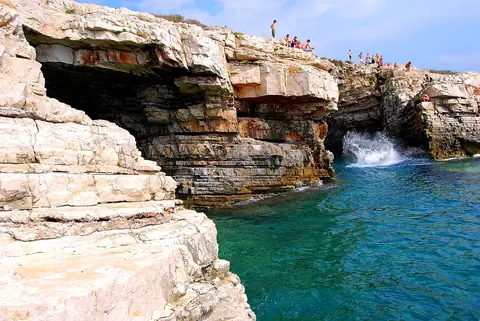
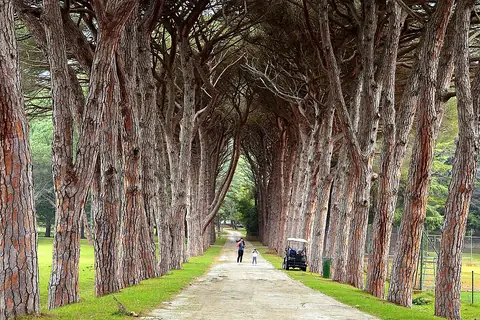
Don't expect sand in Rovinj. You swim from flat rocks, concrete slabs and pebbles – pack water shoes. The best bathing area starts a ten-minute walk south of the old town: Zlatni rt (Golden Cape) forest park, laid out in the late 19th century by the industrialist Hütterott family, with cedars, pines and holm oaks down to the water.
Lone Bay pebble beach at the edge of the park, beach bars, good for families
Zlatni rt / Punta Corrente rock slabs, very clear water, climbing rocks; no cars – walk or cycle
Škaraba unspoilt coves south of the park, quieter, no facilities
Red Island (Crveni otok) and Katarina boats from the harbour roughly hourly in season; Katarina is right off town, Red Island further out with pebble beaches and a naturist area
Lim Bay, hinterland and day trips
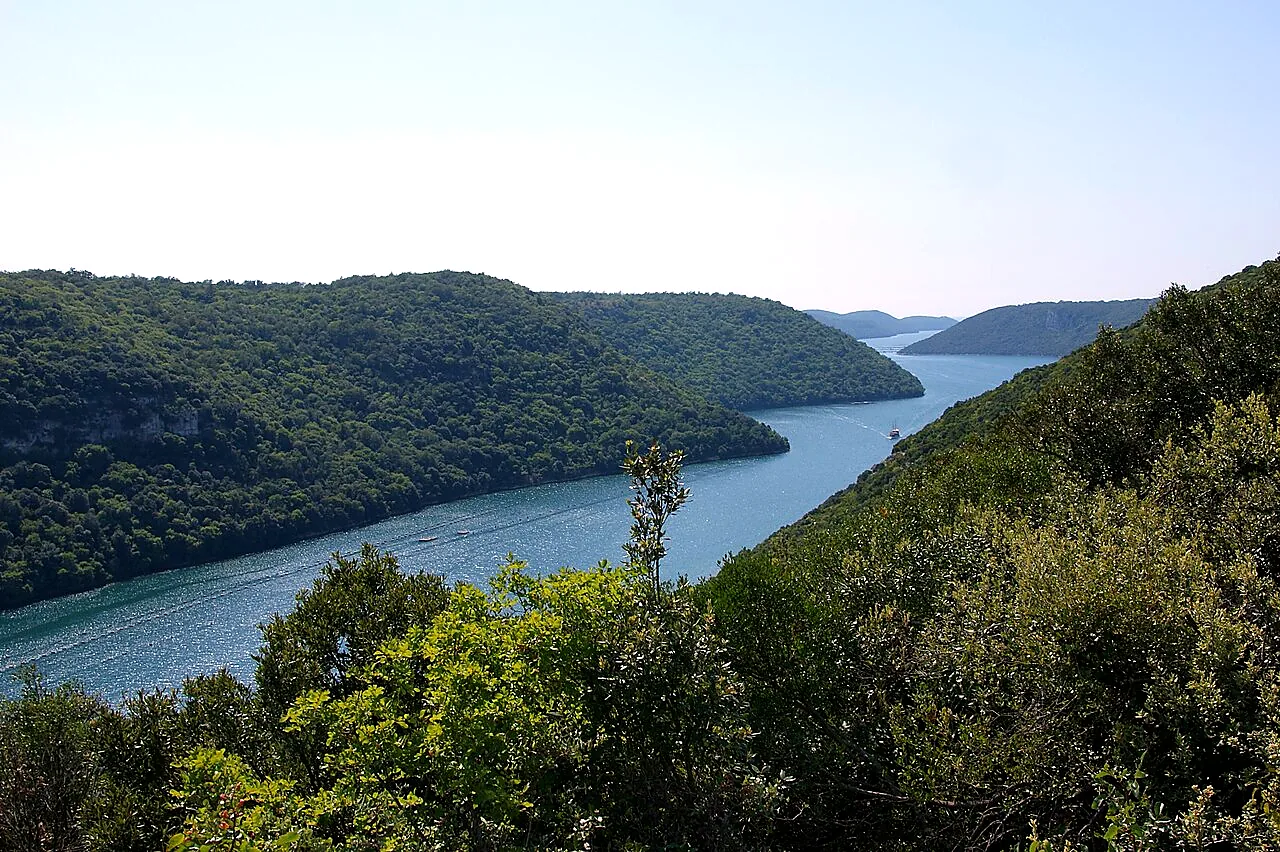
North of Rovinj the Limski kanal cuts about 10 km inland – technically a drowned river valley rather than a true fjord. Oysters and mussels are farmed here, and the restaurants at the end of the inlet serve them fresh. Boat trips from Rovinj and Vrsar sail into the bay; by car the viewpoint above it is about 20 minutes away.
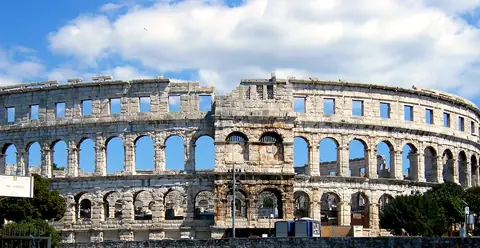
Inland, Bale (10 km, medieval hilltop village) and Svetvinčenat with its Renaissance square and Morosini-Grimani castle are worth the detour. Pula and its Arena are 40 minutes away, Poreč about 45.
Food and drink
Rovinj is Istria's culinary hotspot: fish and seafood, truffles from the Mirna valley, olive oil and Malvazija white wine. Restaurants right on the waterfront charge for the view; eat two alleys back or around the market and you usually pay less. Fish is often priced by weight – ask for the total before ordering.
The market at the edge of the old town (fruit, cheese, oil, fish hall) is the best place for picnic shopping in the morning.
Getting there and parking
The old town is car-free. Large paid car parks are on the edge (including Valdibora north of the centre and towards Lone in the south). In July and August they are often full by late morning – arrive early or walk/cycle from your accommodation. If you stay in the old town, expect to carry your luggage some distance.
The nearest airport is Pula; Trieste and Ljubljana are alternatives at 2–2.5 hours' drive. Buses link Rovinj with Pula, Poreč and Zagreb; there is no railway.
Honest verdict: when is Rovinj worth it?
Rovinj is ideal for short breaks and couples, less so for pure beach holidays with small children (rocks, hardly any sand). In high summer day-trippers squeeze through the alleys; evenings are lovelier. For peace, come in May, June or September – the sea is warm enough from June and often still 23 °C in mid-September. Winter is quiet, many restaurants close, but the town belongs to the locals.
Note: To protect the personal rights of people shown and to respect third-party copyright, some images on this page are AI-generated. They show typical impressions and may differ in detail from how the places actually look.